How to Choose the Right Hooklift for Your Operation
10.13.26
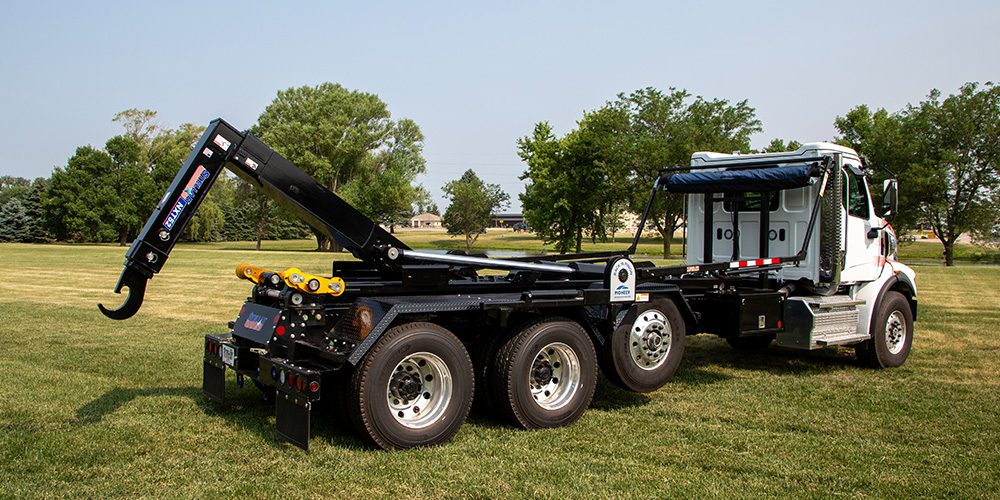
A hooklift can turn one truck into one of the most versatile assets in your fleet. Swap a dump body for a flatbed. Move equipment in the morning and haul debris in the afternoon. Put one truck to work across jobs that might otherwise require several dedicated vehicles.
But that versatility depends on choosing the right hooklift for the work you actually do.
Capacity matters, but it’s only part of the equation. Body lengths, hook height, chassis requirements and even how many operators will use the truck can all influence which hooklift system makes the most sense.
Need help sorting through the options? Download the Stellar® Hooklift Selection Guide for an in-depth look at hooklift styles, capacities, configurations and more.
Choosing the right hooklift starts with five key questions.
1. What Do You Need Your Hooklift to Do?
Start with the work, not the equipment. What are you hauling today? What other jobs could the truck take on tomorrow?
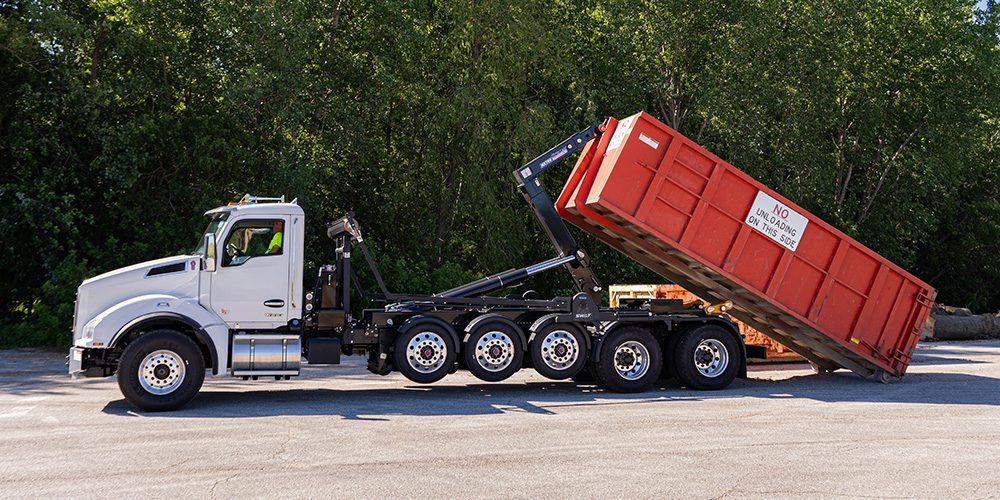
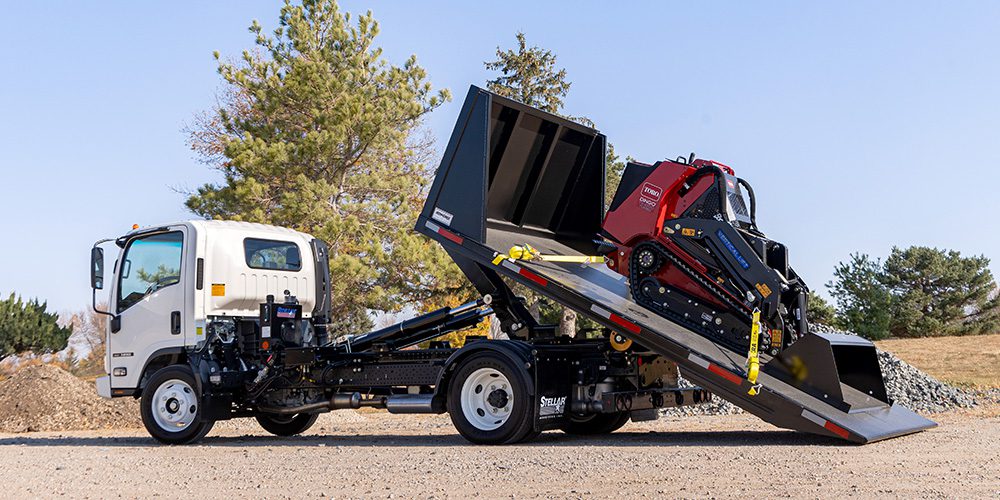
Hooklifts can pick up, transport and place a wide range of interchangeable bodies, making them useful for everything from material and equipment transport to liquid handling, field service, waste and recycling, and storage applications. In fact, there are more than 100 potential hooklift uses.
That flexibility is where a hooklift can really earn its keep. Instead of dedicating individual trucks to individual jobs, fleets can keep one chassis working by changing the body to match the task.
Think beyond your most common application, too. If you expect your operation to grow or change, choosing a hooklift with room to adapt can give you more ways to put that truck to work over its lifetime.
2. How Much Capacity Do You Really Need?
Bigger isn’t automatically better. Undersize your hooklift and it may not be able to handle the loads your operation demands. Oversize it and you could spend more on capacity you rarely use.
The goal is to match the hooklift’s lift and dump ratings to the loads you expect to handle most often. Body length and chassis requirements matter, too.
A few questions can help narrow the field:
- What are the lightest and heaviest loads you’ll routinely handle?
- What are the shortest and longest bodies you expect to use?
- Which hook heights do your current containers require?
- What chassis class makes sense for your operation?
- Are there bodies or applications you may want to add later?
Answer those before choosing a model, and you’re far less likely to end up with a truck that’s either under-equipped or more truck than you need.
3. How Much Flexibility Does Your Operation Need?
Not every fleet needs the same level of flexibility. If you regularly switch between different body types and sizes, you will want a hooklift designed to accommodate that variety. If your fleet uses standardized containers, simplicity and ease of operation may matter more.
That distinction can help determine whether a telescopic or non-telescopic hooklift is the better fit. Stellar offers both styles, giving fleets options based on how their trucks are actually used.
4. Which Stellar Hooklift Series Fits the Job?
Once you’ve defined your capacity and flexibility requirements, you can start zeroing in on the right equipment.
Stellar offers two hooklift series designed around different operational priorities. The NXT™ Series features telescopic designs, while the Shuttle Series uses a non-telescopic design.
- NXT™ Series: Advanced Versatility
For fleets that want maximum adaptability, the NXT Series combines a telescopic design with multiple capacity, body length and hook height options. It’s designed for operations that need one truck to take on a wide range of jobs — now and as needs change.
- Shuttle Series: Simple, Cost-Effective Performance
For fleets with standardized containers or multiple operators, the Shuttle Series keeps things simple. Its non-telescopic design offers straightforward operation and dependable performance without adding flexibility you may not need.
Ready to compare the options? The Stellar Hooklift Selection Guide breaks down capacities, hook heights, body lengths and minimum GVWR across the complete lineup.
5. What Kind of Support Comes After the Sale?
Choosing a hooklift isn’t only about what happens on day one. Parts availability, service support, warranty coverage and operator resources all affect the value of the equipment over its working life. When a truck is earning money, getting it back on the job quickly matters.
Stellar Hooklifts are backed by a limited warranty that includes five-year structural component and three-year paint failure coverage, along with authorized service support, replacement parts and a nationwide distributor network.
It’s worth factoring that long-term support into your selection just as carefully as capacity and configuration.
Get More from Every Truck
The right hooklift isn’t necessarily the biggest or most complex system available. It’s the one that fits your loads, bodies, chassis, operators and plans for the future. And when those pieces line up, one truck can do a whole lot more.
Ready to find your fit? Explore the complete Stellar Hooklift lineup and compare models in the selection guide, request a quote or contact our team of experts to discuss the right solution for your operation.
For related content, go to:
- StellarⓇ Work Trucks Now Available Through Sourcewell
- 100+ Different Uses for a Hooklift
- Customer Video: Fleck & Son Stays Productive With Stellar Hooklifts
- Customer Video: Stellar Hooklift Versatility Ensures Year-Round Work for RJ Lawn and Landscape
- Customer Video: Fleck & Sons Stays Productive With Stellar Hooklifts
- Customer Video: Junk Rescue Depends on Stellar Reliability
- Hooklift Product Literature